Enter your search

Results will be displayed to the left.

Uncategorised

RPPEO Physicians

Base Hospital Physicians

The RPPEO authorizes Base Hospital Physicians to provide advice, orders, or consultation in real time to paramedics. Through calls to these emergency medicine physicians or “patching,” ​paramedics may receive support during patient care.

The patches are all recorded and are reviewed as part of an (audit of paramedic care and physician compliance with the Ministry of Health’s Advanced Life Support Patient Care Standards (ALS PCS) and their other paramedic care standards documents.

Base Hospital physicians are available 24/7 at two sites: Ottawa and Kingston.

Excellence Highlight

Providing base hospital physician education

The University of Ottawa and Queens University Emergency Residency Programs collaborate with the RPPEO to prepare the emergency physicians of the future. Third year residents are introduced to Emergency Medical Services (EMS) and paramedicine during EMS Month and its popular EMS Bootcamp where they interact with subject matter experts in paramedicine on wide-ranging topics.

​During EMS Month, residents are trained to participate in online medical support. After this, they can give real time phone advice to paramedics. By becoming intimately familiar with the environments paramedics function in during EMS Bootcamp, the residents are better able to understand the complexities in which paramedics practice, making the advice they provide safer.

The University of Ottawa and Queens University Emergency Residency Programs collaborate with the RPPEO to prepare the emergency physicians of the future. Residents are invited annually to apply to the RPPEO EMS Fellowship.

An EMS Fellowship gives up to 5 emergency medicine residents the opportunity to work within the RPPEO, participating in developing new tools for medical support and learning about the paramedic's clinical scope. Residents who complete an EMS fellowship have an intimate understanding of paramedic care and the out-of-hospital environment, preparing them with the experience in ambulance systems and paramedicine that will help them become future leaders in emergency medicine.

Meet the team

Read more …RPPEO Physicians

  • Hits: 9427

RPPEO Vehicle Procedure

UPDATED MARCH 5, 2026

Please review the updated terms and conditions before requesting a vehicle. 

RPPEO Vehicle Procedure

(KIA SEDONA & DODGE CARAVAN)

Please review the RULES and EQUIPMENT before booking a vehicle.

  • Terms of use before travel

    1. Prior to booking travel seek manager approval. Vehicles should only be used for work-related travel.
    2. If an overnight stay is required during your trip, please complete a  TOH travel pre‑approval request form and add Hannah Holder under the email CC section before it is finalized. Please note that any expenses related to work‑related travel must be pre‑approved, or TOH will not reimburse the costs.
    3. Prior to taking a vehicle, book the vehicle for the duration of your corporate trip. You can check availability and book a vehicle using the Microsoft Bookings Page named “rppeovehiclebooking”: on the RPPEO Website Calendar - RPPEO Booking Page
    4. In the event there are any restrictions to your ability to drive in Ontario, such as driver’s license suspension or a medical order restricting driving, please report these promptly to your manager and do not operate the vehicles.
  • During Travel

    1. On the day of your trip, retrieve the vehicle key and ESSO gas card from the lockbox located in the storage room.
    2. Perform a visual walk-around inspection of the vehicle before you enter the vehicle at the beginning of your trip, and again at the end of your trip. Report any visual damage or problems with the vehicle immediately to your manager.
    3. **At the beginning of your trip, document in the RPPEO Vehicle log in whichever vehicle you will be driving (i.e.- Kia Sedona or Dodge Caravan):
      1. your name,
      2. the purpose of using vehicle,
      3. the date of usage, and
      4. the starting odometer
    4. Before returning the vehicle, ensure it has a full tank of unleaded gasoline—this is both a courtesy for the next driver and necessary to accurately account for gas expenses related to your travel. The ESSO gas card can be used at any ESSO gas station; please plan ahead to refuel during your trip. At the pump, you will need the driver number (654889) and the vehicle’s current odometer reading (in kilometers) to authorize the card. Make sure to bring the gas receipt and submit a copy to finance for accounting purposes.
  • After Travel

    1. Return the vehicle to the designated parking space at the RPPEO office. Return the key and gas card to the lock box when your trip is finished.
    2. Ensure you report any indicator lights (on the dashboard) that may be on, or may come on, to your manager.
    3. **Once you have returned the vehicle to RPPEO, the odometer reading in the logbook.
    4. Please scan your gas receipts and e-mail them directly to Hannah Holder for filing and accounting purposes. Once sent, kindly notify Hannah as a courtesy.

     **It is important to document the starting and final odometer reading related to your trip. We need to document the total distance traveled; items 7 and 11 are requirements of the Canada Revenue Agency for corporate vehicles.

  • Reminders and General Guidelines

    1. Obey all traffic laws in the city/township you are in and be courteous toward other drivers. You are a representative of The Ottawa Hospital while operating the company vehicle.
    2. Administrative staff will coordinate vehicle scheduled maintenance.
    3. Do not lease, sell, rent, or lend the company vehicles.
    4. Only RPPEO staff registered under the company insurance plan can drive the vehicles.
    5. Only hands-free operation of smart-phones or telephone devices is permitted in the vehicle. Do not text or use a handheld device while driving.
    6. In both the Kia Sedona and Dodge Caravan you will find a
      1. 120W cup holder power inverter that allows you to charge iPad, phones, laptops etc.
      2. A safety kit is also in each of the vehicles that includes:
        • Key components among the 86 pieces include an air compressor, booster cables, tow strap, fleece blanket, and tool kit.
      3. Tool kit contains multi-tool, LED flashlight, (1) D Cell battery, tire gauge, and a 2-in-1 screwdriver.
      4. 60-piece first aid kit contains instruction card, (5) towelettes, (10) sterile cotton balls, (40) adhesive strips, 2-piece tape strips, and (2) 2\" x 2\" (5 x 5 cm) gauze pads.
      5. Knit gloves, roll duct tape, emergency poncho, (10) cable ties, window mount reflective triangle, 8' (2.43 m) 8-gauge booster cable CCA, 14' (4.26 m) 4500 lb (2041 lb) capacity tow strap, signal cone and a carrying case.
  • Process for Reporting Incidents Requiring Automobile Insurance

    In any situation involving a vehicle incident—such as an accident, infraction, or damage to the vehicle—the driver is required to notify their manager and/or supervisor as soon as possible. It is essential to follow all outlined steps for reporting a claim, infraction, and/or automobile accident to ensure proper documentation and compliance with insurance requirements.

    In the Event of an Automobile Accident

    If you are involved in a vehicle accident, you must act responsibly by exchanging information with any other involved driver(s). Submit a report to one of the Ottawa Police Collision Reporting Centers and take photographs of the accident scene and any damage to the vehicles. If police respond to the scene, obtain a copy of the police report for your records.

    If the vehicle is not drivable after an accident, contact Northbridge Insurance at 1-855-621-6262 using the provided insurance details. Northbridge Insurance will assist and may recommend CSN Turpin-Capital for towing and vehicle repairs. 

    CSN Turpin-Capital

    Towing 24/7 Assistance: 1-877-700-4276
    1615 Laperriere Avenue, Ottawa, ON K1Z 8S7
    Tel: 613-728-1908
    Email: info@turpincollision.com

    A formal claim must be submitted to The Ottawa Hospital’s automobile insurance in every accident or incident that may result in a claim, including but not limited to collisions, damage, theft, or infractions involving the company’s vehicle.

    Please review the comprehensive process for reporting a claim or handling incidents that may require submitting an insurance claim by consulting the following resource: Viewing Automobile Insurance, C-SOP II 323

BY CLICKING THE BUTTON BELOW I ACCEPT THESE TERMS AND PROCEDURES

View Calendar

Register to read more …

  • Hits: 1211

scenarios2

2026 Spring CME Micro-Skill Stations


Medication Cross-Check

Medic 1: Alright, medication cross-check 

Medic 2:  Ready 

Medic 1: I’m going to give medication for *REASON*(*hands vial to partner without stating the medication*) Please check: the medication name, concentration, and expiry date. 

Medic 2: This is *MEDICATION NAME*10mg in 1 mL, and expiry date is next year, March 2027. (Medic2 hands vial back to Medic1). What are the indications and contraindications for *MEDICATION? 

Medic 1: The patient meets the conditions of *REASON FOR GIVING MEDICATION**STATE CONTRAINDICATIONS* 

Medic 2: What is the volume you’re going to draw up? What route?  

Medic 1: I’m going to draw up *STATE VOLUME*, and administer it PO (*shows partner the syringe*). Check: confirm *VOLUME OF MEDICATION*  

Medic 2: I agree that the concentration of *STATE CONCENTRATION**STATE VOLUME* is the right volume for an *STATE DOSE AMOUNT* dose. Any concerns before you give it? 

Medic 1: No concerns. I am going to give *STATE DOSE OF MEDICATION, NAME OF MEDICATION, VOLUME OF MEDICATION, REASON FOR GIVING THIS MEDICATION, ROUTE OF MEDICATION*  

Medic 2: Go ahead and give it. Cross-check complete.


  • What are aliquots and when should you use them?

    • Small, equal parts of the maximum single dose that are administered q 3 minutes until the desired analgesia is achieved or the maximum single dose is reached. Paramedics should document the total amount of a single dose administered and not each individual aliquot as a separate dose.
  • What are the differences between opiate naïve and opiate tolerant? And why is this important in dose preparations?

    • An opiate naive individual is someone who has not taken opioids regularly or recently enough to develop tolerance. This can include people who have never used opioids or those who have not used them for a significant period, often defined as 7 to 120 days, depending on clinical guidelines. Because their bodies have not adapted to opioids, even a small dose can produce a strong effect. 
  • Which analgesia option is best? How do I choose between using an opioid and ketamine?

    • Paramedics are encouraged to use their clinical judgment when choosing which analgesia is best suited for their patient. 
    • Clinical judgement should include weighing the risks and benefits of using the various medications. This includes: previous use, other medications the patient is taking, medical history, event history, current and expected hemodynamic stability. 
  • What are the main methods to monitor patients that have received opioids, benzos, or ketamine?

    • EtCO2, RR, HR, BP, LOA, O2 sats, signs of adverse reactions 
  • Can you start dosing at lower amounts than what is written in the medical directives?

    • Yes, it is appropriate to consider utilizing a lower dosing regimen set out in the ALS PCS. Aliquots are also useful in these situations. Paramedics are encouraged to use clinical judgement to promote patient safety. Document all reasoning on ePCR. If unsure, patch to a BHP. 

Read more …scenarios2

  • Hits: 3877

Service Forms

Service Forms

  • Certification Request Form

    Paramedic colleges or paramedic service: download and complete this PDF to request the certification of a student or paramedic.

    PDF Download

  • Cross-Certification Referral Form

    Updated April 18, 2023

    For paramedics who would like to request cross-certification in the RPPEO region from another base hospital. Please submit one form for every Regional Base Hospital Program or certifying body within the past 10 years.

    Please download and save this form, then submit by email. 
    Details within the PDF.

    PDF Download

  • Return to Clinical Practice

    Paramedic services anticipating the return to work of a paramedic who has been away for 90 days or more, please complete this form to submit a Return to Clinical Practice request on behalf of the paramedic.

    Online Form

forms

Read more …Service Forms

  • Hits: 11572

Sponsors

Hosted by the Regional Paramedic Program for Eastern Ontario

OHB24 Sponsorship

Join us as a sponsor at 'OBHG24: 15 Years in the Making,' a pivotal event scheduled for September 24 - 26, 2024. This gathering serves as a unique crossroads where industry leaders, healthcare professionals, and experts convene to shape the future of emergency paramedic care in Ontario. Your sponsorship offers a prime opportunity to actively guide discussions, influence strategies, and contribute expertise to chart innovative solutions for Ontario's ever-evolving healthcare landscape. Join this collaborative journey towards person-centered emergency care and be an essential driver in steering the course of emergency paramedic care towards a brighter, more patient-centric future.

We are seeking sponsors who bring diverse expertise and perspectives to OBHG24. Ideal sponsors include organizations or entities well-versed in adult learning, quality management, risk assessment, emergency healthcare, research, technology, or partner engagement within the healthcare sector. Sponsors with a passion for driving innovation, a commitment to person-centered care, and a desire to shape the future of emergency paramedic care in Ontario will find this Annual Meeting a valuable platform to showcase their expertise and contribute to collaborative discussions. Whether you're an industry leader, a healthcare innovator, or an expert in any of these fields, your sponsorship will play a vital role in steering the direction of emergency paramedic care for a more inclusive, resilient, and patient-centric future.


Sponsorship Opportunities

Sponsoring OBHG24offers a unique opportunity to engage with a diverse spectrum of professionals shaping the future of emergency healthcare.

As a sponsor, you'll have exclusive access to Ontario's ambulance system medical directors and base hospital physicians – all emergency physicians - paramedics, and hospital staff from seven major teaching hospitals, including representatives from Ornge, Ontario's air ambulance provider. Sponsors will interact with decision-makers and leaders at the forefront of patient quality & safety, adult continuing medical education, health data management, health and human research, and health communications. This access presents an unparalleled chance to network, collaborate, and forge connections with key influencers and innovators driving transformative change in Ontario's emergency healthcare landscape. Your sponsorship not only showcases your commitment to advancing healthcare but also offers an invaluable platform to engage with thought leaders and decision-makers shaping the future of emergency paramedic care.

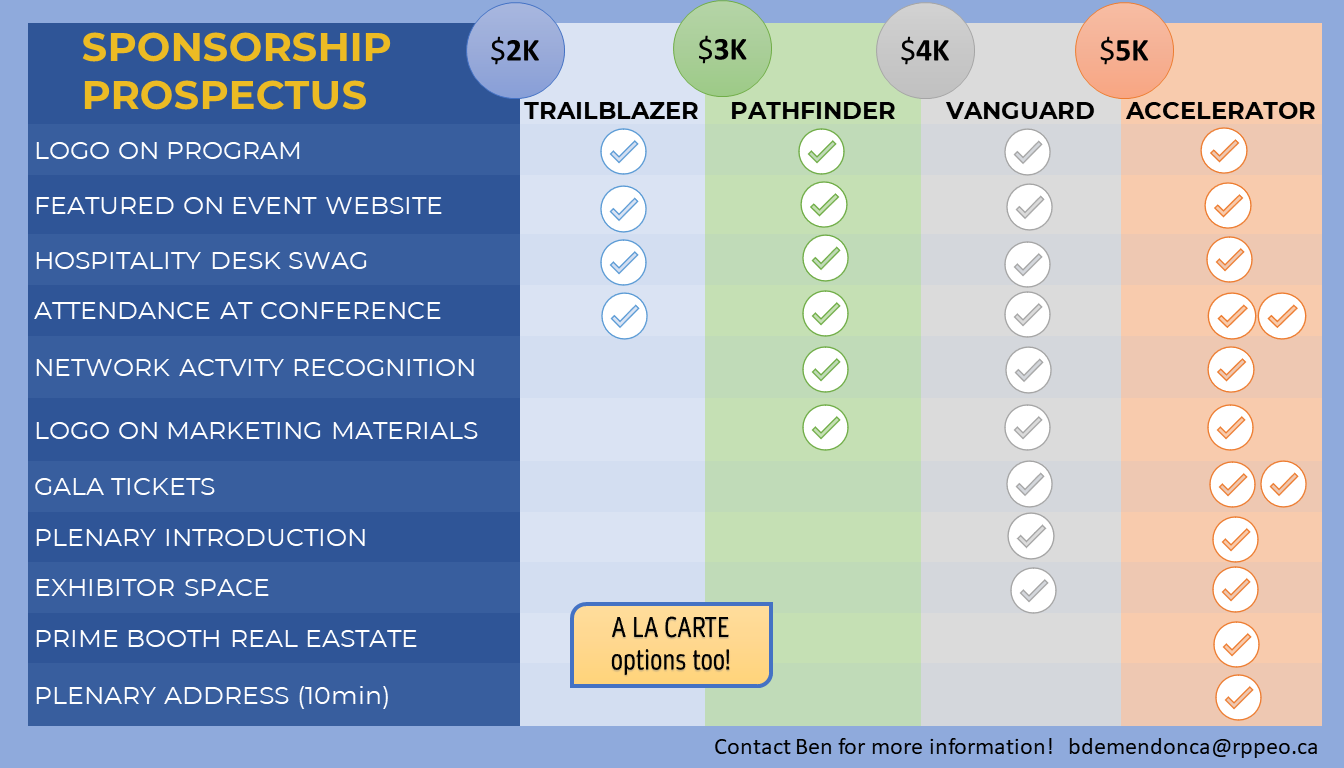
  • Accelerator Level: Positioned as the driving force behind transformative advancements in paramedic care. $5K and up
  • Vanguard Partner: At the forefront, steering the future of emergency healthcare in Ontario. $4K
  • Pathfinder Sponsorship: Pioneering the way forward in shaping innovative strategies for tomorrow's care. $3K
  • Trailblazer Supporter: Leading the charge towards a brighter future in paramedic practices. $2K

Download the OBHG24Sponsorship Proposal as a PDF. 
pdfOBHG24_Sponsorship_Proposal.pdf

Become a Sponsor

View video

Sponsors

Our Sponsors for OHBG24

  • ZOLL Medical Corporation

    Accelerator Sponsor

    ZOLL® is focused on improving outcomes with novel resuscitation and acute critical care technology.

    Visit Zoll

  • Ontario Medical Supply

    Vanguard Sponsor

    Visit OMS

  • Prehos

    Vanguard Sponsor

    Prehos redefines paramedic's time

    Visit Prehos

Read more …Sponsors

  • Hits: 1783

Staff Portal

  • ACE TOOL

  • MedicASK Submissions

  • Add Training Event

  • Submit Timesheet

  • Staff Contacts

TOH Links for Staff

  • UKG Time Sheet

    Your online time card. Schedule time off, view your vacation bank, staff schedule and more.

    Read more

  • TOH Citrix Workspace

    Access the following applications on the TOH Network:

    • HRIS
    • ELM
    • Remote Desktop

    Open Citrix

  • TOH Sharepoint

    Files and resources

    Go to Sharepoint

  • TOH Service Now

    To create a support request send an email to servicenow@toh.ca

    Email support

The Team


RPPEO News Hub

RPPEO New has moved to Sharepoint. With so many of our work tools already in Office Online, the integrations possible with SharePoint make it easy and secure as our news tool. We hope you'll enjoy getting the news here!

Visit Sharepoint

Vehicle Reservations

Book Now

Read more …Staff Portal

  • Hits: 8844

Standards

Standards

Regional Paramedic Practice Standards

Certain approved programs in our area may publish additional guidance for the safety and quality of care of the patients who benefit from the program. Examples of these regional programs include stroke or trauma bypass and the Paramedics Providing Palliative Care program. The RPPEO partners with the groups who lead these initiatives to help inform their processes. The responsibility to monitor and update these standards rests with the organizations who lead these programs. For this reason, the RPPEO does not re-publish regional or local program documents.

The RPPEO publishes policies for paramedics to use in their clinical work and professional certifications. Our policies help paramedics understand what is expected in terms of process, timing, reporting, documentation and other rights and responsibilites.

RPPEO Policies

Provincial Paramedic Practice Standards

Ontario provicial standards set the expectations for paramedic clinical practice. They are provincially developed and maintained through the Ontario Base Hospital - Medical Advisory Group and approved by the Ministry of Health's Director of the Emergency Health Regulatory and Accountability Branch (EHRAB). Paramedics across Ontario are expected to provide clinical care by following these standards:

Read more …Standards

  • Hits: 14191